Cultivating a Playful Practice

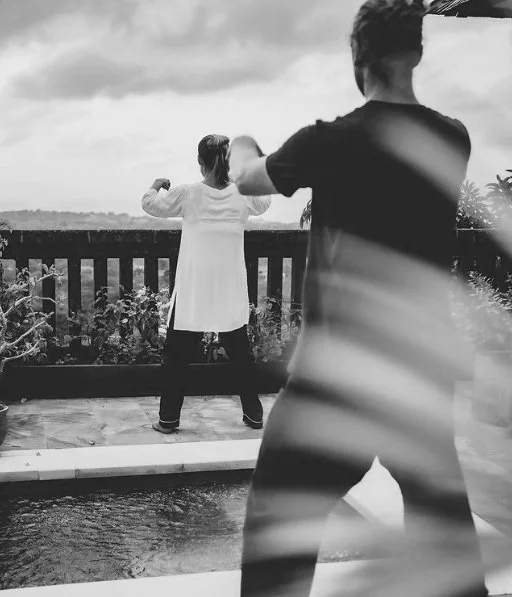
Freestyle Tai Chi and Qi Gong are like permission slips for the body and mind to play. Their slow, exploratory movements strip away the pressure of right angles and rigid repetition, inviting you to experiment with weight, breath, and balance the way a child tests the limits of a new toy. That unhurried curiosity loosens habitual patterns—both physical and mental—so you start noticing subtle shifts in posture, timing, and intention. With each soft step and spiral, you become more willing to try something awkward, imperfect, or offbeat, and that willingness is the seed of creativity.

With each soft step and spiral, you become more willing to try something awkward, imperfect, or offbeat, and that willingness is the seed of creativity.
— Jason C. Brown

The internal arts tune you into sensation first, idea second. When you prioritize sensing the pivot of your hip or the flow of qi through your side, your mind stops sprinting toward outcomes and instead luxuriates in process. This sensory-first approach mirrors how children learn: they reach, feel, and repeat without overthinking. As your nervous system calms through rhythmic breath and gentle focus, mental chatter quiets and space opens for unexpected associations, playful imagery, and novel solutions to emerge. Creativity, freed from the tyranny of immediate productivity, becomes a natural byproduct of practice.

Playfulness in movement also rewires your relationship to failure. In the soft, forgiving environment of internal practice, falling out of a posture or losing balance isn’t a catastrophe but feedback: a funny, informative hiccup that invites a tweak or a laugh. That attitude carries over to creative work—sudden mistakes are reimagined as detours, accidents as serendipity. Over time, you cultivate a lighter, more experimental stance toward projects, more willing to sketch, improvise, and iterate without self-critique shutting the door.

Finally, Freestyle Tai Chi and Qi Gong reconnect you with a sense of wonder. The deliberate slowness makes ordinary sensations feel novel again—how a breath can ripple through the ribs, how fingers can unfurl with the softness of a fern. Approaching life with that same delighted attention transforms everyday movement and creative play into ongoing discovery. Your body remembers how to be adventurous; your mind remembers how to be childlike. And together they make space for a life that’s both nimble and full of joyful invention.

Secret Superpowers for the Creative Mind

Freestyle Tai Chi and Qi Gong are like secret superpowers for the creative mind — they give you a slow-motion playground where ideas stretch and rearrange themselves. The flowing, improvisational movements open neural pathways by syncing breath, attention, and motion; this gentle integration loosens mental rigidity and makes space for fresh connections. When you practice letting movement lead instead of thought policing every step, your brain learns to tolerate uncertainty and play with possibilities — the exact conditions that spark creative insight.

Physically, these arts act as longevity tonic disguised as a delightful ritual. Their low-impact, full-body sequences maintain joint mobility, balance, and proprioception with minimal wear-and-tear, while the mindful emphasis on alignment and relaxed power prevents injury from repetitive or high-intensity activities. Regular practice increases circulation, enhances fascia health, and trains the body’s adaptive systems so you move with resilience and ease long into later decades — like upgrading your chassis for a longer, smoother ride.

Together, Freestyle Tai Chi and Qi Gong create a virtuous loop: mental flexibility fosters exploratory movement, and resilient bodies provide the freedom to keep creating. The result is sustained creative output and physical capacity that feel less like maintenance and more like play — a life where curiosity, expression, and motion age gracefully together.

Build a Creative Practice with Freestyle Tai Chi

Freestyle Tai Chi invites curiosity by removing the pressure of perfection. Without fixed forms to replicate, practitioners experiment with tempo, direction, and intention, which activates the same divergent thinking used in creative problem-solving. Small improvisations—an unexpected weight shift, a playful reach—become micro-experiments that train the mind to welcome novelty instead of fearing mistakes.

A Freestyle Tai Chi practice reconnects the body’s sensations with imagination. As attention lands on breath, balance, and the felt sense of limbs, movement ideas arise organically; the body suggests possibilities the mind hadn’t considered. This somatic feedback loop turns each session into a conversation between impulse and control, where new movement phrases are discovered rather than imposed.

Falling back in love with movement happens when practice feels like play again. Freestyle Tai Chi emphasizes ease, curiosity, and personal expression, making movement accessible and joyful rather than performance-driven. Over time, that playful exploration spills into daily life—people move more freely, take creative risks, and remember that movement can be a source of delight, not just utility.

Moving Body - Nimble Mind

My work here at Moving Body - Nimble Mind starts with a simple reality: the mind is not separate from the body. It is expressed through the body, shaped by the body, and continuously regulated by the body.

This is the unified worldview behind movement cultures: movement is not merely mechanical activity. It is one of the primary languages of the nervous system, and one of the most direct ways to influence how a person feels, focuses, and functions.

I’ll be sharing more about my local work in the form of classes and workshops.

Here’s a nice video of my Moving Body - Nimble Mind workshop. A workshop your body and brain will love.

The Creative Path of Tai Chi

Creativity preserves the essence of Tai Chi—harmonious movement and mindful presence—while making it useful, personal, and fun.
— Jason C. Brown

A freestyle creative approach to Tai Chi unlocks personal expression and adaptability. Rather than strictly repeating fixed sequences, practitioners are encouraged to improvise movements that honor the principles of balance, breath, and rootedness.

This playfulness deepens body awareness: when you invent a flow that suits your anatomy and mood, you learn what alignment and weight transfer truly feel like, not just what they are supposed to look like on paper.

Creativity in practice fosters resilience and practical skill.

In real-life interactions—unexpected pushes, uneven ground, or sudden shifts—rigid adherence to a prescribed form can leave you unprepared. Freestyle Tai Chi trains responsiveness: you practice sensing intention and adjusting in the moment, refining sensitivity to timing and contact. This builds a nimble body and a quick mind that can apply tai chi principles dynamically, rather than mechanically replicating memorized postures.

Finally, a non-dogmatic approach keeps the practice alive and joyful. When Tai Chi is treated as a living art, students stay engaged because they are invited to explore, play, and co-create with partners or music. That sustained curiosity leads to longer-term commitment and deeper integration of the art into everyday life.

Why You Should Play Tai Chi

Freestyle Tai Chi takes the graceful foundation of traditional forms and sprinkles in spontaneity, turning a disciplined practice into a living conversation between body and moment. Moving unpredictably within Tai Chi’s slow, continuous framework trains balance, timing, and sensitivity—skills that translate to better posture, reduced fall risk, and a calmer nervous system.

Because Freestyle Tai Chi emphasizes adaptability rather than rote repetition, practitioners learn to improvise with breath, weight shifts, and intention, which strengthens proprioception and reflexes in ways that static practice doesn’t. The result is a resilient, responsive body that feels nimble in everyday life and confident under unexpected physical demands.

A playful approach to the internal martial art of Tai Chi invites curiosity, experimentation, and joy, transforming training from a checklist into a laboratory of movement. When students are encouraged to tinker—adding quirks, altering rhythms, or turning partner drills into games—they deepen their internal awareness without pressure, making subtle concepts like rootedness and silkiness more accessible.

Play reduces performance anxiety, increases creativity, and helps internalize principles through exploration, so the benefits of Tai Chi become practical habits rather than intellectual ideas. In short: move with curiosity, laugh at the stumbles, and you’ll cultivate a body and mind that are both strong and delightfully nimble.

Play is the Way

Human movement as an art is a captivating expression of creativity and individuality. When we move with intention and abandon, we paint a unique picture with our bodies, a silent language that transcends words. Just as a painter blends colors to evoke emotions, a dancer uses their body to convey stories, feelings, and ideas. Like a musician who shapes sound into melodies, a martial artist transforms movement into patterns of power and grace.

To fully embrace this artistic expression, it is essential to approach movement with a childlike spirit.

Children possess a natural curiosity, a willingness to experiment, and a freedom from self-consciousness that allows them to explore movement without inhibition. By adopting a similar mindset, we can rediscover the joy of play, the thrill of discovery, and the boundless possibilities that movement offers. This childlike approach invites us to let go of expectations, embrace mistakes as opportunities for growth, and simply enjoy the process of self-expression.

Qi Gong Creative

Qi Gong, an ancient Chinese practice combining gentle movements, deep breathing, and meditation, can be a powerful tool for creatives seeking to enhance their work.

By cultivating a calm and focused mind, Qi Gong helps to quiet the internal chatter that often blocks the flow of inspiration. It allows creatives to tap into a deeper well of intuition and access a more relaxed and receptive state, enabling them to connect with their inner muse more readily.

Qi Gong also improves physical and mental well-being, reducing stress and anxiety that can hinder creativity. By improving circulation and energy flow, it enhances overall vitality and reduces fatigue, allowing creatives to sustain focused work for longer periods. The gentle movements and mindful breathing techniques also help to release tension and improve posture, reducing physical discomfort that can impede creative expression.

Ultimately, Qi Gong fosters a sense of inner peace and balance, crucial for accessing the creative spirit. By cultivating a more harmonious internal state, creatives can approach their work with greater clarity, focus, and emotional depth. This can lead to more original, insightful, and impactful creations, as the artist is able to express themselves with greater authenticity and freedom.

How to Build Skills Through Play

Play is often the most enjoyable and effective way to develop physical skills because it engages both the body and mind in a dynamic and interactive way.

During play, whether it's hopping, skipping, jumping, or kicking a ball, people naturally experiment with their movements, refining their coordination, balance, and agility through fun activities. This playful exploration allows for a deeper understanding of their physical capabilities, encouraging them to push boundaries and try new things without the fear of failure. The spontaneous nature of play fosters creativity, providing an environment where learning is embedded in joyful experiences rather than structured drills.

Moreover, play enhances social interaction, which further develops physical skills. When people engage in team sports or group games, they learn the importance of teamwork, communication, and strategy, all of which require specific physical competencies. Whether it’s passing a ball, evading a defender, or collaborating on a group obstacle course, these activities demand not only individual skill development but also an awareness of how their movements affect others.

The combination of physical exertion and social dynamics creates a robust learning atmosphere where skills are honed organically, making play a powerful tool for nurturing growth and development in a person’s physical journey.

Let Play Be the Guide

Approaching your movement practice with a child-like spirit fosters a sense of playfulness and curiosity, encouraging exploration and experimentation. Children naturally move with joy and abandon, free from the constraints of self-judgment and the pressure to perform. By embracing this spirit, you can rediscover the intrinsic joy of movement, allowing your body to guide you rather than adhering to rigid rules or striving for perfection. This playful approach cultivates a deeper connection to your body and mind, fostering a sense of ease and flow within your practice.

In contrast, a strict dogmatic approach often leads to rigidity, frustration, and even injury. When you focus solely on achieving specific goals or adhering to a particular style, you may neglect the nuances of your own body's needs and limitations. This can lead to overtraining, burnout, and a loss of enjoyment in your practice. A child-like spirit, on the other hand, encourages you to listen to your body, honor its limitations, and adapt your practice accordingly. This allows for a more sustainable and fulfilling movement journey, where progress is measured not by external achievements but by the internal sense of joy and well-being it brings.